
What happens when your neighbor’s broken pipe floods your condo? Who pays for the damage, and what does your condo insurance actually cover?
Watch My Condo Flooding Story on YouTube
Imagine walking into your beautifully remodeled condo and discovering water coming up through your wood floors.
Now imagine finding out the water isn’t even coming from your unit.
That’s exactly what happened to me.
I’m Karla Casey, a REALTOR® with Coldwell Banker Realty, and I’ve been selling real estate in Hawaiʻi for nearly 30 years. I’ve dealt with plenty of unexpected situations in real estate, but this one happened to me personally. And what followed was a frustrating lesson in condo ownership, absentee property owners, water damage, and insurance.
It Started on a Saturday Morning
I own a condo on Oʻahu that I normally rent as a vacation rental. Some friends from the mainland were visiting, and I had offered them the condo during their stay. Early one Saturday morning, they got out of bed and noticed water on the bedroom floor. Then they discovered water in the hallway and my newly remodeled bathroom. My first thought was that a pipe in my recently remodeled bathroom had developed a leak. I immediately contacted my contractor and asked him to cut a hole in the wall to inspect the plumbing. The pipes were completely dry. He then removed the baseboards and discovered water flowing between the walls and my beautiful wood flooring. The water was coming from somewhere else. And we had absolutely no idea where.
The Search for the Water Leak
My condo is on the ground floor of a four-unit townhouse building. There are two larger, two-story units on either side, with my unit and another unit above me in the middle. Naturally, I suspected the upstairs unit. Unfortunately, the tenant was in Japan, and the unit was owned by a Japanese corporation with no on-island representative we could contact. We couldn’t access the garage to shut off the water. The weekend maintenance crew couldn’t enter the unit without authorization. Meanwhile, water continued flowing through my condo. To make matters worse, neither the head maintenance person nor the project manager could initially be reached. It took approximately four to five hours before someone authorized the maintenance crew to shut off the building’s water supply. Problem solved?
Not even close.
The Discovery Nobody Expected
After shutting off the water, the project manager insisted that maintenance notify the other units in the building. I explained that mine was the only occupied unit, but he wanted notices placed on the doors anyway. Thank goodness he insisted. When the maintenance crew approached the larger unit next door, they looked through a window. What they saw was unbelievable.
Water was pouring from the upper floor. The ceiling was collapsing, and water was cascading down the staircase like a waterfall.
Water was even flowing out the front door. And from there, it was finding its way into my condo. Apparently, a pipe had broken in an upstairs bathroom. We had no idea how long the water had been running. The unit had been vacant, and the owners hadn’t updated their contact information with management. Nobody knew how to reach them.
When Your REALTOR® Becomes a Detective
After nearly 30 years in Hawaiʻi real estate, I’ve learned how to track down property information. Apparently, that experience also qualifies me as a part-time detective. I researched the property ownership, located a telephone number, and contacted the owners. It’s never a pleasant phone call when you have to tell someone their vacant property has suffered extensive water damage. Unfortunately, by then, the damage was already done. Eventually, maintenance discovered that our building actually had two separate water shutoff valves. They were able to restore water to my unit and the one above while keeping the water shut off to the affected side of the building. At least my guests could finally take a shower!
The Water Damage Restoration Nightmare
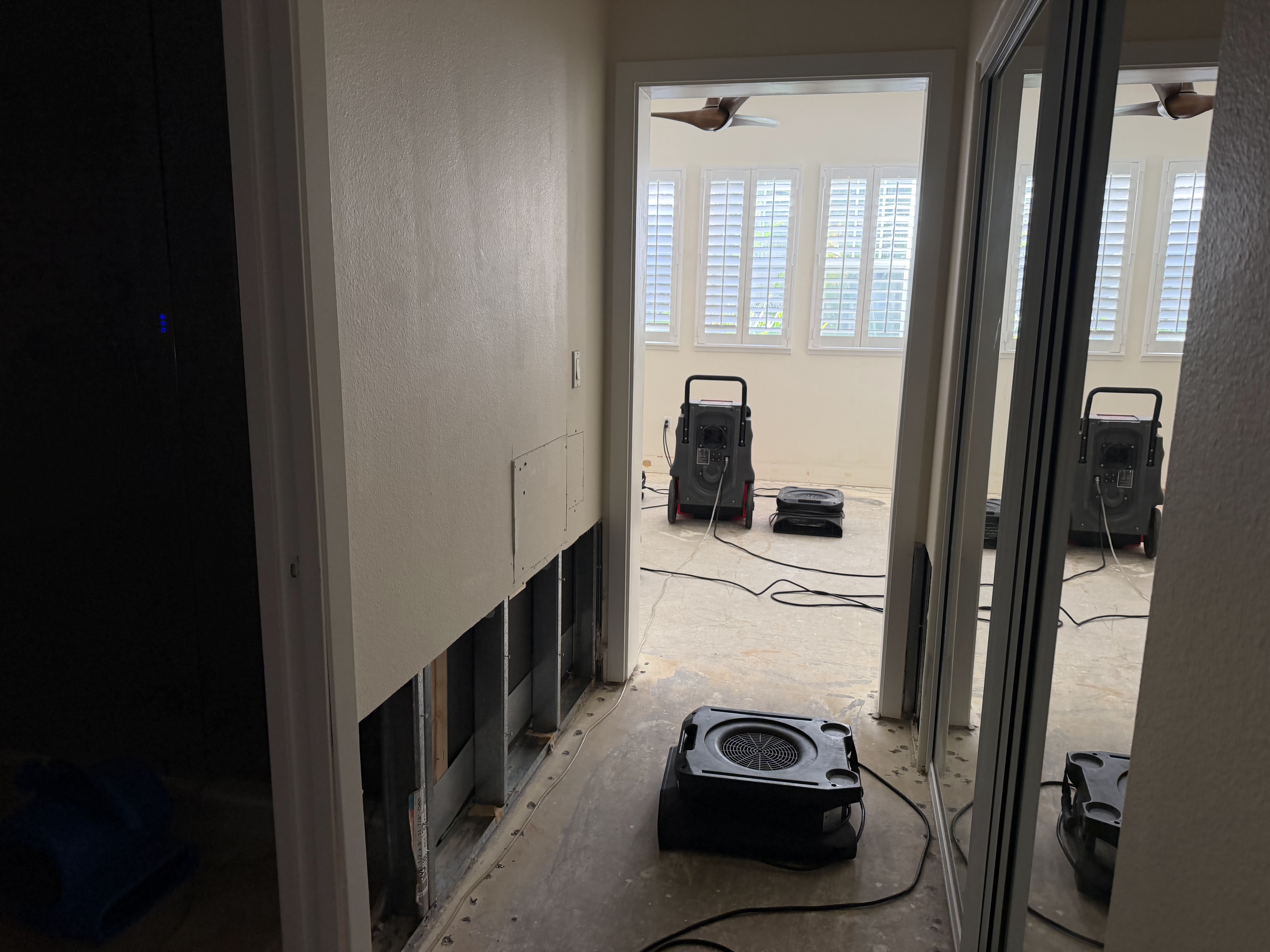
That same Saturday, I contacted a water damage remediation company. They arrived that afternoon and began the drying process with heavy-duty fans and equipment. A few days later, demolition began.
Here’s what happened to my beautifully remodeled condo:
- My brand-new bathroom cabinet was removed.
- My bedroom and hallway wood flooring was torn out.
- Sections of drywall were removed.
- Large openings were created in the walls.
- I now have a hole between my bedroom and my neighbor’s living room.
When people talk about an open floor plan, this is definitely not what I had in mind!
And the restoration work was only part of the problem. Next came the insurance companies.
Who Pays When a Neighbor Floods Your Condo in Hawaiʻi?
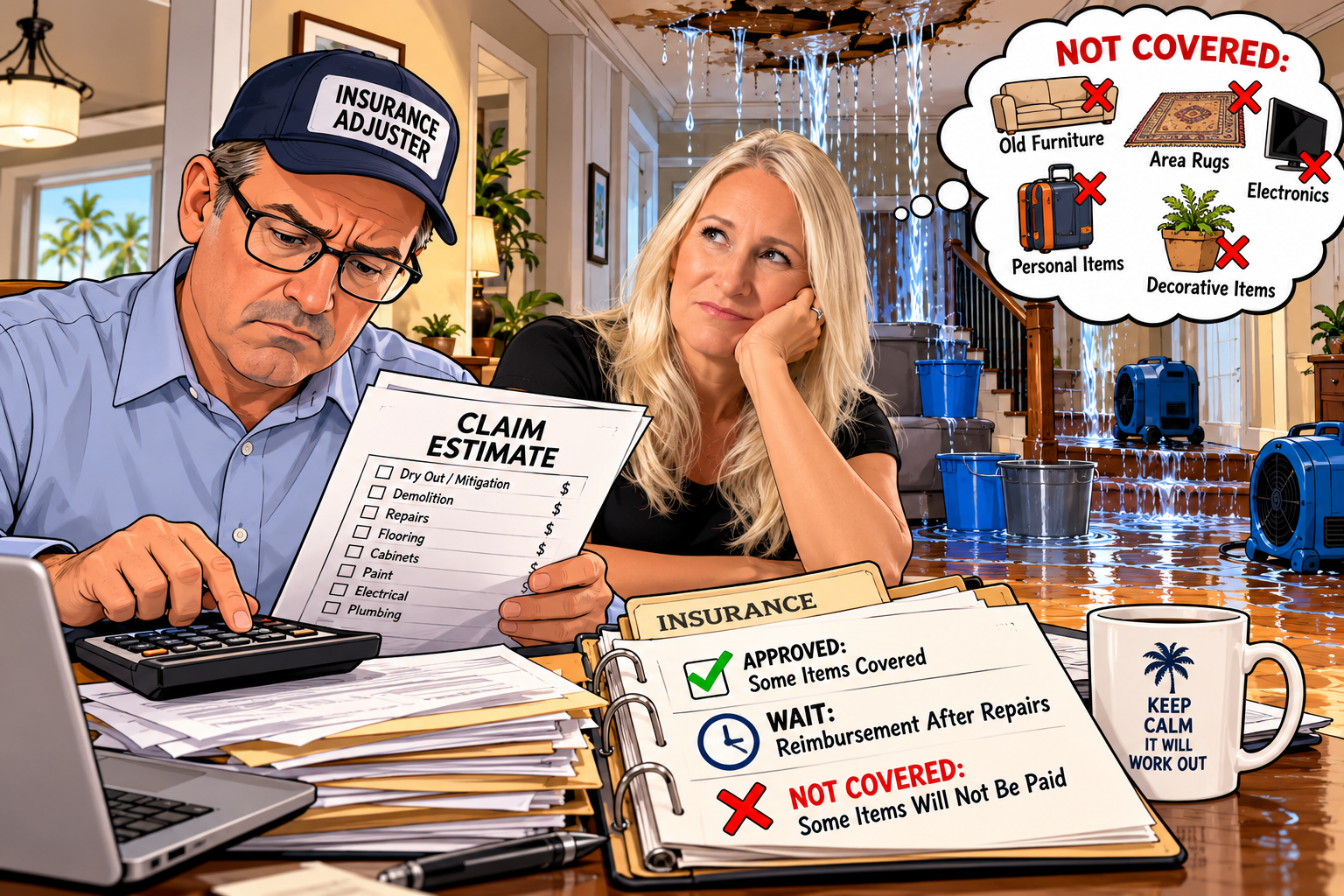
This is where condo ownership can become complicated. When you own a condominium, there may be multiple insurance policies involved.
1. The Condo Association’s Master Insurance Policy
In my situation, the association’s master insurance policy responds first to certain covered damage. However, the association’s coverage generally addresses the unit according to the coverage requirements and original construction standards applicable to our condominium. That doesn’t necessarily include all the improvements I’ve made.
2. Your Personal HO6 Condo Insurance
An HO6 policy is designed for individual condominium owners. Depending on your policy, it may provide coverage for improvements and betterments, personal property, liability, and certain additional expenses. For me, this is particularly important because I’ve remodeled my bathroom and installed upgraded flooring. My HO6 policy may also provide coverage for lost rental income, subject to the policy terms. But here’s where things get frustrating. I have wood flooring throughout my condo. My insurance company has indicated that it will only replace the damaged flooring up to a certain point. That means I could end up with different wood flooring in different areas of my home. Not exactly the look I was going for. And even when a claim is covered, reimbursement can take time. In the meantime, I may have to pay substantial expenses out of pocket.
Important: Condo insurance responsibilities vary depending on the association’s governing documents, master insurance policy, individual HO6 policy, deductibles, and the circumstances of the loss. Never assume that a neighboring owner’s insurance will automatically pay for all your damage.
Why Water Damage Can Affect Everyone’s HOA Fees
Here’s something many condo owners don’t realize. A major water damage claim doesn’t necessarily affect only the owner whose pipe broke. It can affect neighboring owners and potentially the entire condominium association.
Repeated or significant insurance claims can contribute to:
- Higher association insurance premiums
- Increased insurance deductibles
- Greater financial exposure for the association
- Potential increases in monthly maintenance fees or special assessments
When homeowners wonder why condominium association fees keep increasing, insurance costs are one factor worth examining. And the frustrating part? Even owners who have never experienced water damage may feel the financial consequences.
A Warning to Absentee Condo Owners in Hawaiʻi
If you own a condo in Hawaiʻi but live on the mainland or another island, it’s especially important to have someone available locally.
Hawaiʻi Revised Statutes Chapter 521, Section 521-43(f), addresses the requirement for certain off-island residential landlords to designate an agent residing on the same island as the rental property.
But regardless of legal requirements, having a reliable local contact is simply good property management.When something goes wrong, minutes matter. A broken pipe can cause extensive damage before anyone even realizes there’s a problem.
Five Things Every Condo Owner Should Do Before Leaving
Whether you’re leaving your condo for a weekend, several months, or an extended vacation, consider these precautions:
1. Turn off your water supply. If your plumbing system permits it, shut off the water to your unit before leaving. Follow any building-specific procedures and consider appliances or systems that require water.
2. Update your association contact information. Make sure management has your current telephone number, email address, and emergency contact information.
3. Designate a reliable local representative. Someone should be available to respond when you’re away, especially if your property is rented.
4. Review your condo insurance coverage. Understand what your association’s master policy covers and what your individual HO6 policy covers, including upgrades, deductibles, and potential loss of rental income.
5. Consider water leak detection devices. Water sensors and automatic shutoff systems may help reduce damage when leaks occur.
The Real Cost of a Broken Pipe
I’m now dealing with a damaged condo, insurance claims, repairs, potential lost rental income, and expenses that may take months to recover. All because a pipe broke in a vacant neighboring unit. But what bothers me most is that this could happen to almost anyone living in a condominium. It doesn’t matter whether you own a primary residence, second home, or vacation rental. When you share walls, plumbing infrastructure, and insurance responsibilities with neighboring properties, their problems can quickly become yours.
My message is simple: Turn off your water when appropriate, keep your contact information current, and protect your neighbors as well as your own property.
Watch My Condo Flooding Story
In my video, I take you through what happened, how we discovered the source of the flooding, and the insurance challenges I’m now facing.
Thinking About Buying or Selling a Condo on Oʻahu?
Condominium ownership involves more than the purchase price and monthly maintenance fees. Understanding association responsibilities, insurance coverage, building maintenance, and property management can help you make better decisions before buying.
With nearly 30 years of Hawaiʻi real estate experience, a background as a real estate paralegal, and experience owning and managing my own brokerage, I bring a practical perspective to buying and selling real estate on Oʻahu. I work with buyers, sellers, and investors throughout Ko Olina, Honolulu, Waikīkī, Hawaiʻi Kai, Portlock, Kahala, Kailua, Kakaʻako, the North Shore, and surrounding communities.
Karla Casey | REALTOR®
Coldwell Banker Realty
📞 808-366-4306
Have you experienced condo flooding or water damage?
I’d love to hear your story. Did your insurance cover everything, or did you have to pay out of pocket?
Share your experience in the comments on my YouTube video.
And if you own a condo, please share this article with another property owner.
It might save someone thousands of dollars — and a whole lot of headaches.

