Oʻahu Condo Flooding Nightmare: Not My Leak, But My Bill!

What happens when your neighbor’s broken pipe floods your condo? Who pays for the damage, and what does your condo insurance actually cover?

Watch My Condo Flooding Story on YouTube

Not My Leak. But My Bill!

Imagine walking into your beautifully remodeled condo and discovering water coming up through your wood floors.

Now imagine finding out the water isn’t even coming from your unit.

That’s exactly what happened to me.

I’m Karla Casey, a REALTOR® with Coldwell Banker Realty, and I’ve been selling real estate in Hawaiʻi for nearly 30 years. I’ve dealt with plenty of unexpected situations in real estate, but this one happened to me personally. And what followed was a frustrating lesson in condo ownership, absentee property owners, water damage, and insurance.

It Started on a Saturday Morning

I own a condo on Oʻahu that I normally rent as a vacation rental. Some friends from the mainland were visiting, and I had offered them the condo during their stay. Early one Saturday morning, they got out of bed and noticed water on the bedroom floor. Then they discovered water in the hallway and my newly remodeled bathroom. My first thought was that a pipe in my recently remodeled bathroom had developed a leak. I immediately contacted my contractor and asked him to cut a hole in the wall to inspect the plumbing. The pipes were completely dry. He then removed the baseboards and discovered water flowing between the walls and my beautiful wood flooring. The water was coming from somewhere else. And we had absolutely no idea where.

The Search for the Water Leak

My condo is on the ground floor of a four-unit townhouse building. There are two larger, two-story units on either side, with my unit and another unit above me in the middle. Naturally, I suspected the upstairs unit. Unfortunately, the tenant was in Japan, and the unit was owned by a Japanese corporation with no on-island representative we could contact. We couldn’t access the garage to shut off the water. The weekend maintenance crew couldn’t enter the unit without authorization. Meanwhile, water continued flowing through my condo. To make matters worse, neither the head maintenance person nor the project manager could initially be reached. It took approximately four to five hours before someone authorized the maintenance crew to shut off the building’s water supply. Problem solved?

Not even close.

The Discovery Nobody Expected

After shutting off the water, the project manager insisted that maintenance notify the other units in the building. I explained that mine was the only occupied unit, but he wanted notices placed on the doors anyway. Thank goodness he insisted. When the maintenance crew approached the larger unit next door, they looked through a window. What they saw was unbelievable.

Water was pouring from the upper floor. The ceiling was collapsing, and water was cascading down the staircase like a waterfall.

Water was even flowing out the front door. And from there, it was finding its way into my condo. Apparently, a pipe had broken in an upstairs bathroom. We had no idea how long the water had been running. The unit had been vacant, and the owners hadn’t updated their contact information with management. Nobody knew how to reach them.

When Your REALTOR® Becomes a Detective

After nearly 30 years in Hawaiʻi real estate, I’ve learned how to track down property information. Apparently, that experience also qualifies me as a part-time detective. I researched the property ownership, located a telephone number, and contacted the owners. It’s never a pleasant phone call when you have to tell someone their vacant property has suffered extensive water damage. Unfortunately, by then, the damage was already done. Eventually, maintenance discovered that our building actually had two separate water shutoff valves. They were able to restore water to my unit and the one above while keeping the water shut off to the affected side of the building. At least my guests could finally take a shower!

The Water Damage Restoration Nightmare
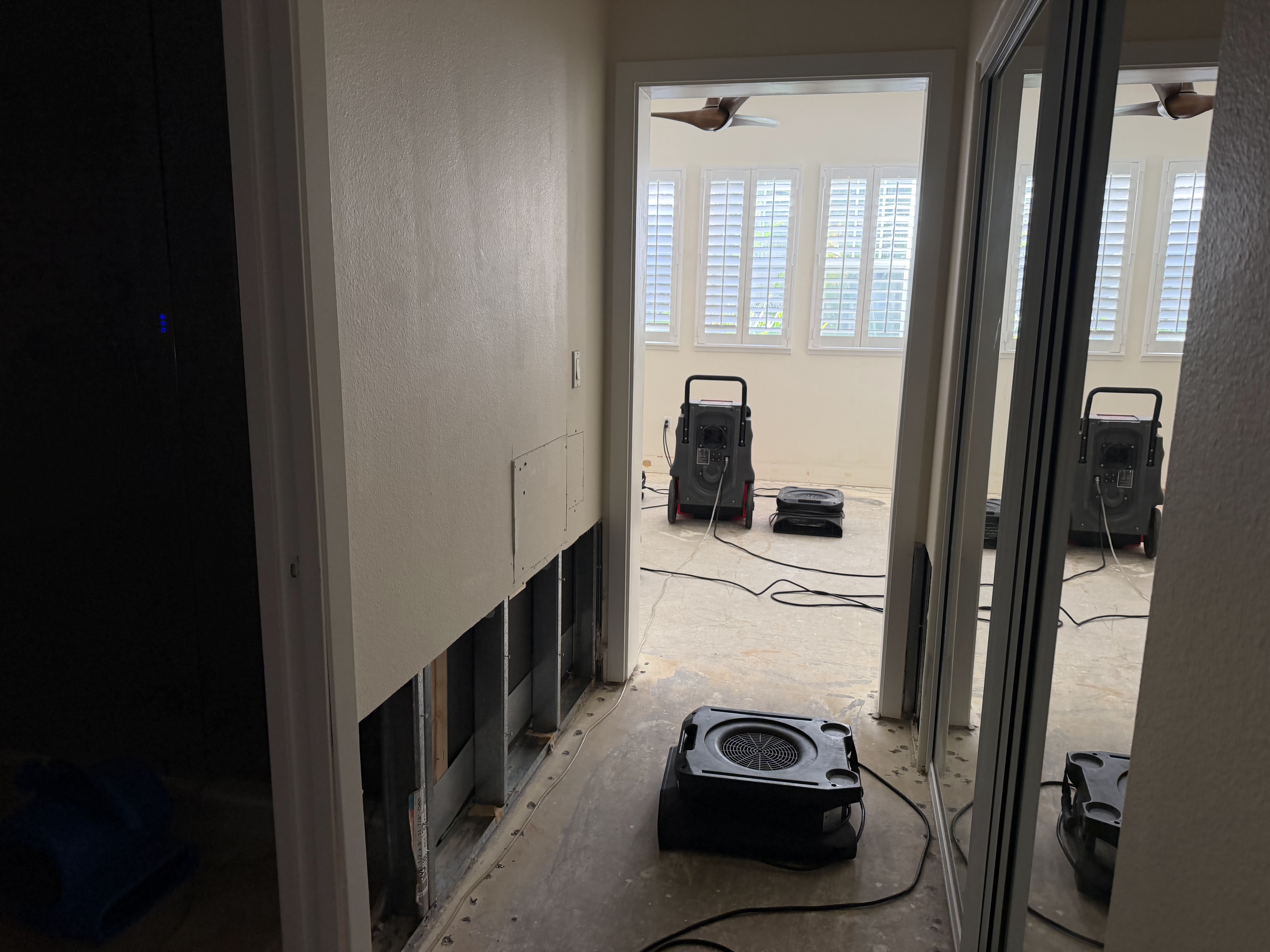
That same Saturday, I contacted a water damage remediation company. They arrived that afternoon and began the drying process with heavy-duty fans and equipment. A few days later, demolition began.

Here’s what happened to my beautifully remodeled condo:

  • My brand-new bathroom cabinet was removed.
  • My bedroom and hallway wood flooring was torn out.
  • Sections of drywall were removed.
  • Large openings were created in the walls.
  • I now have a hole between my bedroom and my neighbor’s living room.

When people talk about an open floor plan, this is definitely not what I had in mind!

And the restoration work was only part of the problem. Next came the insurance companies.

Who Pays When a Neighbor Floods Your Condo in Hawaiʻi?

This is where condo ownership can become complicated. When you own a condominium, there may be multiple insurance policies involved.

1. The Condo Association’s Master Insurance Policy

In my situation, the association’s master insurance policy responds first to certain covered damage. However, the association’s coverage generally addresses the unit according to the coverage requirements and original construction standards applicable to our condominium. That doesn’t necessarily include all the improvements I’ve made.

2. Your Personal HO6 Condo Insurance

An HO6 policy is designed for individual condominium owners. Depending on your policy, it may provide coverage for improvements and betterments, personal property, liability, and certain additional expenses. For me, this is particularly important because I’ve remodeled my bathroom and installed upgraded flooring. My HO6 policy may also provide coverage for lost rental income, subject to the policy terms. But here’s where things get frustrating. I have wood flooring throughout my condo. My insurance company has indicated that it will only replace the damaged flooring up to a certain point. That means I could end up with different wood flooring in different areas of my home. Not exactly the look I was going for. And even when a claim is covered, reimbursement can take time. In the meantime, I may have to pay substantial expenses out of pocket.

Important: Condo insurance responsibilities vary depending on the association’s governing documents, master insurance policy, individual HO6 policy, deductibles, and the circumstances of the loss. Never assume that a neighboring owner’s insurance will automatically pay for all your damage.

Why Water Damage Can Affect Everyone’s HOA Fees

Here’s something many condo owners don’t realize. A major water damage claim doesn’t necessarily affect only the owner whose pipe broke. It can affect neighboring owners and potentially the entire condominium association.

Repeated or significant insurance claims can contribute to:

  • Higher association insurance premiums
  • Increased insurance deductibles
  • Greater financial exposure for the association
  • Potential increases in monthly maintenance fees or special assessments

When homeowners wonder why condominium association fees keep increasing, insurance costs are one factor worth examining. And the frustrating part? Even owners who have never experienced water damage may feel the financial consequences.

A Warning to Absentee Condo Owners in Hawaiʻi

If you own a condo in Hawaiʻi but live on the mainland or another island, it’s especially important to have someone available locally.

Hawaiʻi Revised Statutes Chapter 521, Section 521-43(f), addresses the requirement for certain off-island residential landlords to designate an agent residing on the same island as the rental property.

But regardless of legal requirements, having a reliable local contact is simply good property management.When something goes wrong, minutes matter. A broken pipe can cause extensive damage before anyone even realizes there’s a problem.

Five Things Every Condo Owner Should Do Before Leaving

Whether you’re leaving your condo for a weekend, several months, or an extended vacation, consider these precautions:

1. Turn off your water supply. If your plumbing system permits it, shut off the water to your unit before leaving. Follow any building-specific procedures and consider appliances or systems that require water.

2. Update your association contact information. Make sure management has your current telephone number, email address, and emergency contact information.

3. Designate a reliable local representative. Someone should be available to respond when you’re away, especially if your property is rented.

4. Review your condo insurance coverage. Understand what your association’s master policy covers and what your individual HO6 policy covers, including upgrades, deductibles, and potential loss of rental income.

5. Consider water leak detection devices. Water sensors and automatic shutoff systems may help reduce damage when leaks occur.

The Real Cost of a Broken Pipe

I’m now dealing with a damaged condo, insurance claims, repairs, potential lost rental income, and expenses that may take months to recover. All because a pipe broke in a vacant neighboring unit. But what bothers me most is that this could happen to almost anyone living in a condominium. It doesn’t matter whether you own a primary residence, second home, or vacation rental. When you share walls, plumbing infrastructure, and insurance responsibilities with neighboring properties, their problems can quickly become yours.

My message is simple: Turn off your water when appropriate, keep your contact information current, and protect your neighbors as well as your own property.

Watch My Condo Flooding Story

Not My Leak. But My Bill!

In my video, I take you through what happened, how we discovered the source of the flooding, and the insurance challenges I’m now facing.

Thinking About Buying or Selling a Condo on Oʻahu?

Condominium ownership involves more than the purchase price and monthly maintenance fees. Understanding association responsibilities, insurance coverage, building maintenance, and property management can help you make better decisions before buying.

With nearly 30 years of Hawaiʻi real estate experience, a background as a real estate paralegal, and experience owning and managing my own brokerage, I bring a practical perspective to buying and selling real estate on Oʻahu. I work with buyers, sellers, and investors throughout Ko Olina, Honolulu, Waikīkī, Hawaiʻi Kai, Portlock, Kahala, Kailua, Kakaʻako, the North Shore, and surrounding communities.

Karla Casey | REALTOR®
Coldwell Banker Realty

📞 808-366-4306

🌐 www.KarlaCasey.com

Have you experienced condo flooding or water damage?

I’d love to hear your story. Did your insurance cover everything, or did you have to pay out of pocket?

Share your experience in the comments on my YouTube video.

And if you own a condo, please share this article with another property owner.

It might save someone thousands of dollars — and a whole lot of headaches.
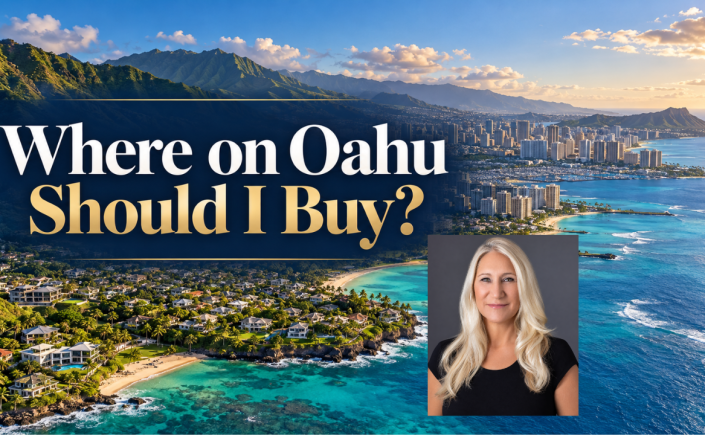
Where Should I Buy on O’ahu? 4 Questions to Answer Before You Pick a Neighborhood

It’s one of the first questions buyers ask me, and my honest answer is: it depends on why you’re buying.

Are you buying a primary residence, a second home, a vacation property or an investment? The right part of O’ahu can be completely different for each one. This post is about buying a primary residence, the home you’ll actually live in every day.

This is also where I see buyers make their biggest mistake. They start looking at neighborhoods before they’ve worked out what they need from a neighborhood. O’ahu looks small on a map, but different parts of the island offer very different ways of living.

So before we talk about Honolulu, Kailua, Hawai’i Kai, Ko Olina, ‘Ewa Beach, the North Shore or anywhere else, here are the four questions I work through with every buyer.

1. Start with your budget, not your dream neighborhood

What’s your price range? And if you’re financing, have you been pre-approved?

If you’re relocating from somewhere like rural Texas, O’ahu prices can come as a shock. Where you live now, a million dollars might buy a large home on acreage, maybe even on a lake. Here, we’re on an island. Land is limited, and land is expensive.

So I don’t start with a dream neighborhood that may or may not fit your budget. I first work out where your budget gives you realistic options. Then we narrow it down from there.

2. Where will you work, and how long will you drive?

Where is your job? If you have children, where will they go to school? And how much of your day are you willing to spend in the car?

Buyers moving to O’ahu often underestimate this. A place that looks close on a map isn’t necessarily a quick drive at rush hour. Kapolei to Honolulu is only about 19 miles, but at peak times that drive can take 45 to 75 minutes. Many areas have one road in and one road out, so one accident can back everything up.

Yes, we have The Bus, and now the Skyline rail system, which is continuing to expand. “Continuing” is the key word. When my daughter and I visited the Titanic museum in Belfast, she was admiring the ship and said, “Wow, Mom, imagine. It only took them a couple of years to build this ship, with all its carvings and furniture, and how long have we been working on the rail?”

So don’t just look at mileage. Think about your actual day: where you’re going in the morning, where you’re coming home from, and how much of your day you want to spend getting there.

3. How do you want to live?

Now for the fun part. Picture an ordinary week and ask yourself:

  • Do you want an urban lifestyle with restaurants, shopping and entertainment nearby?
  • Do you want to be close to the beach, a golf course or a resort community?
  • Would you prefer a traditional residential neighborhood, or something more rural?
  • A house with a yard, or a condo where you can lock the door and leave?
  • Morning walks on the beach, or a garage, more space and a quieter street?

There isn’t one best place to live on O’ahu. There is a place that will fit you much better than the others.

4. Pay attention to what the listing won’t tell you

This is the hard part when you’re relocating and can’t spend weeks exploring the island. A listing gives you the square footage, shows you the kitchen and counts the bedrooms. It doesn’t tell you what it feels like to live there.

Aircraft noise is a good example. Some neighborhoods hear more of it than others. If you’re in the military or used to it, you might barely notice. Someone else hears the same plane and says, “Nope, absolutely not.” Neither of them is wrong.

That’s why I ask for your must-haves and your deal-breakers. The deal-breakers often tell me more.

I learned this from my own sister. After I moved to Hawaii, she decided to buy here too, and she handed me her list. She knew exactly what she wanted, or thought she did. So I listened, showed her around, and let her see different areas and different kinds of homes. She ended up buying something completely different from what she’d imagined, and she spent many very happy years there.

My job isn’t to plug your checklist into the MLS and start opening doors. What you say you want and what will actually make you happy here aren’t always the same. A good agent listens for both.

So, where should you buy?

If you ask me, “Karla, where should I buy on O’ahu?”, I’ll ask you a lot of questions before I answer:

  1. What’s your budget, and are you pre-approved?
  2. Where are you working, and how long are you willing to commute?
  3. What’s important to your household day to day?
  4. What kind of lifestyle do you want?
  5. What are your must-haves?
  6. What can you absolutely not live with?

Once I know those answers, we can match you with the parts of O’ahu that make sense financially and for the way you actually want to live.

I’ve been selling real estate in the islands for almost 30 years, and helping buyers understand the differences between our neighborhoods is one of the most important parts of what I do. If you’re thinking about buying or relocating here and aren’t sure where to start, Contact Me.

Coming next: a closer look at individual O’ahu neighborhoods, what it’s really like to live in each one, and the questions to ask before you buy.

Karla Casey, REALTOR® | Coldwell Banker Realty | RB-17901
Direct: 808.366.4306
Email: karla@kcaloha.com
KarlaCasey.com

New Private Community on O‘ahu’s North Shore

Aloha!

A rare new residential offering is coming to the legendary North Shore of O‘ahu.

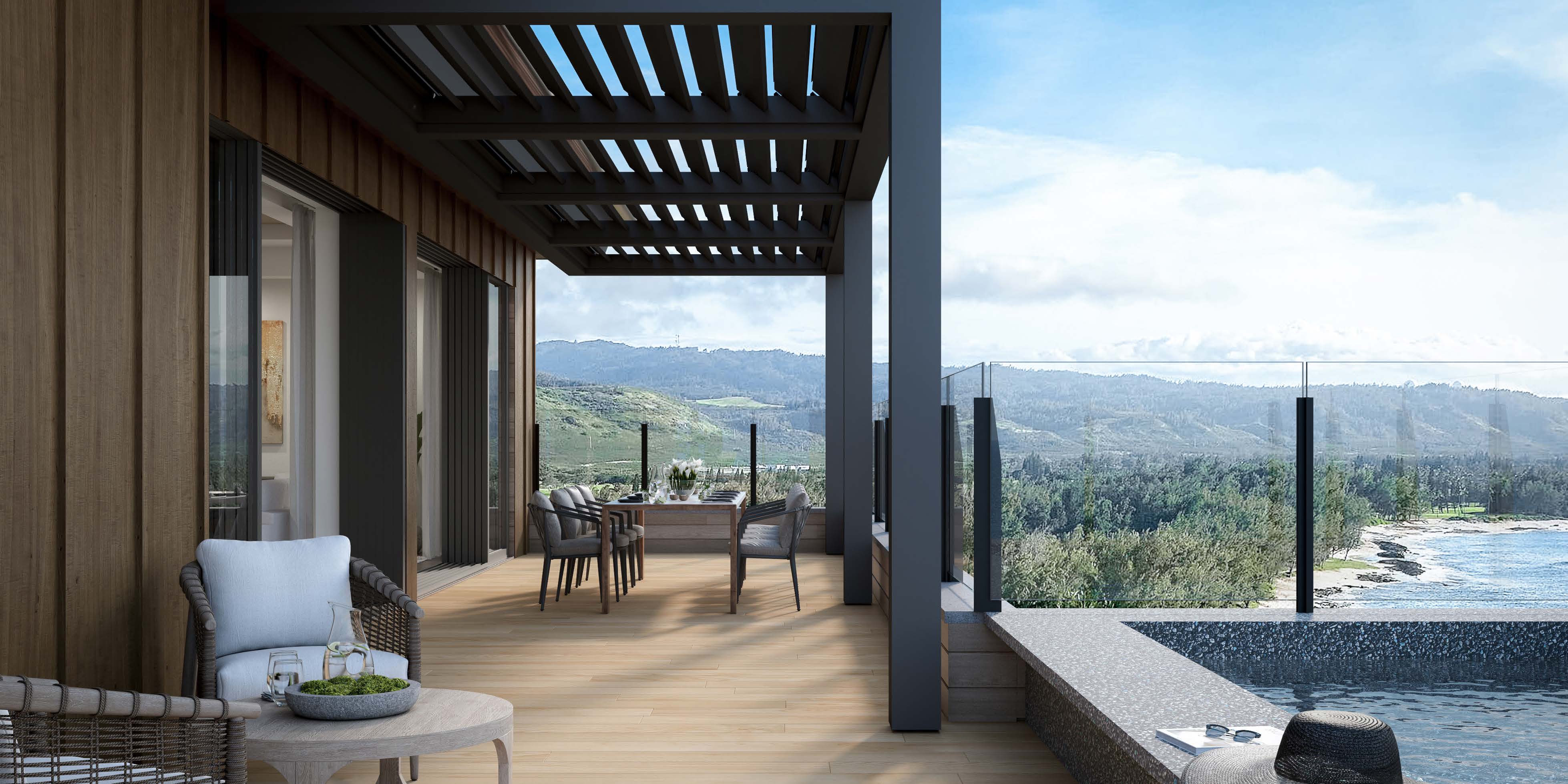
Introducing a new private beachfront community in Kahuku, featuring thoughtfully designed 3- to 6-bedroom residences overlooking the white sands of Kaihalaulu Beach.

Phase I is now being released, offering an exceptional opportunity to secure an early position in this highly limited development.

Highlights include:

  • Oceanfront residences located approximately 150 feet from the beach
  • Phase I includes Buildings 1, 2, 3, and 4
  • Only 100 homes total across 19 buildings when fully completed
  • Estimated Phase I completion: 4th Quarter 2027

Designed for a refined island lifestyle, residents will enjoy an impressive collection of amenities, including:

  • Oceanfront clubhouse and resort-style pool
  • Dedicated lap pool
  • Oceanside bar
  • Pickleball and tennis courts
  • Farm-to-table restaurant
  • Curated wellness offerings
  • Beachfront horseback riding
  • Surf lessons
  • Proximity to world-class North Shore golf

This is a rare opportunity to own in a low-density, thoughtfully planned beachfront community on O‘ahu’s North Shore—where privacy, lifestyle, and natural beauty converge.

For pricing, floor plans, availability, and full project details, please contact me directly.
Early inquiries are strongly encouraged as Phase I inventory is limited.

MORE INFORMATION REQUEST FORM

Oʻahu Housing Market: May 2025 Sales Slowdown Insights

Oʻahu Housing market Recorded Slowdown in Overall Sales Activity in May

Single-family homes show pricing resilience amid steady demand; condo market reflects shifting dynamics

According to figures released by the Honolulu Board of REALTORS®, inventory continues to build in O’ahu’s housing market in both single-family homes and condos. In May, 392 listings in single-family homes were added with 44% increase in the $800,000 to the $999,999 price range. Listings in condos rose to 688 with almost half of them priced between $300,000 and $599,999. Compared to last year at this time, active inventory in single-family homes increased by 27.8% and condos increased 54.8%.

Compared to last month (April 2025), single-family homes sales fell by 2.5% and condo sales fell by 5.3%.

Using data collected from its computerized Multiple Listing Service (MLS) system, the Board reported the following statistics:

Single-Family Home Resales

Number of SalesMedian Sales PriceAverage Sales Price
May 2025235  -5.6%$1,175,000  +8.3%$1,394,811 -1.7%
May 2024249$1,085,000$1,419,039

Condominium Resales

Number of SalesMedian Sales PriceAverage Sales Price
May 2025374  -21.8%$500,000  +1.0%$638,701 +7.7%
May 2024478$495,000$592,694

Click here for full report on the market statistics from the Honolulu Board of Realtor.

Investment Property with Ocean and Harbor Views at Ilikai Marina #790 – Waikiki Hawaii

Marina, Ocean and Sunset Views!

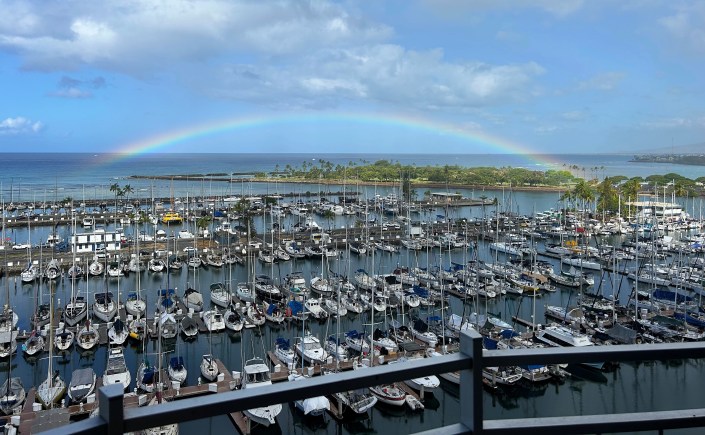
Welcome to your dream island retreat! This 1-bedroom, 1-bath condo on the 7th floor of the Ilikai Marina offers panoramic views of the Pacific Ocean, Magic Island, Hilton Hawaiian Village lagoon, and the Ala Wai Boat Harbor. Enjoy daily sunsets, seasonal whale watching, and Friday night fireworks—all from your private Juliet lanai. You can even check the surf from Waikiki to Ala Moana and watch the sailboats without leaving your home. This turnkey unit features a full kitchen, tile flooring throughout, open layout with natural light and ocean breezes and a Juliet lanai perfect for enjoying the view. Located on the edge of Waikiki, you’re just steps from Ala Moana Center, world-class beaches, fine dining, and entertainment. Short-term rentals are allowed, offering excellent income potential.

Whether you’re looking for a vacation getaway, investment property, or full-time residence, this condo offers the perfect blend of comfort, convenience, and breathtaking scenery.

Interior Sq. Ft. 651, Lanai Sq. Ft. 28, Built 1968, Maintenance Fee and Special Assessment $1,201 per month, Property Taxes $594 per month. Electricity and A/C submetered. Community laundry and parking is available in the building garage for a fee.

Oʻahu Home and Condo Sales April 2025 Analysis

Oʻahu Home and Condo Sales Cool Down Ahead of Summer

Sales activity softens as more listings and active inventory continue to build across the market

According to figures released by the Honolulu Board of REALTORS®, both single-family home and condo sales declined in April. Single-family home sales fell 8.0% year-over-year with 241 closed sales, while condo transactions dropped 8.4% to 395. Year-to-date, sales volume remains behind 2024 levels, down 5.3% for single-family homes and 2.3% for condos.

Using data collected from its computerized Multiple Listing Service (MLS) system, the Board reported the following statistics:

Single-Family Home Resales

Number of SalesMedian Sales Price
April 2025241  -8.0%$1,170,000  +6.4%
April 2024262$1,100,000

Condominium Resales

Number of SalesMedian Sales Price
April 2025395  -8.4%$505,000  -4.4%
April 2024431$528,000

Click here for full report on the April statistics from the Honolulu Board of Realtor.

Ilikai Marina Condo: Ocean Views and Investment Potential

Marina Front Condo at Ilikai Marina #1286 – Stunning Views

Experience sweeping, unobstructed views of the sparkling Pacific Ocean, lush tropical greenery of Magic Island, and the inviting sands of the Hilton Hawaiian Village lagoon—all from the comfort of this beautifully updated 1-bedroom, 1-bath condo on the 12th floor of the Ilikai Marina.

Watch sailboats drift through the marina, check the surf from Waikiki to Ala Moana Park, and catch sight of whales in season. End your day with breathtaking sunsets and enjoy the dazzling Friday night fireworks—all from your own Juliet lanai.

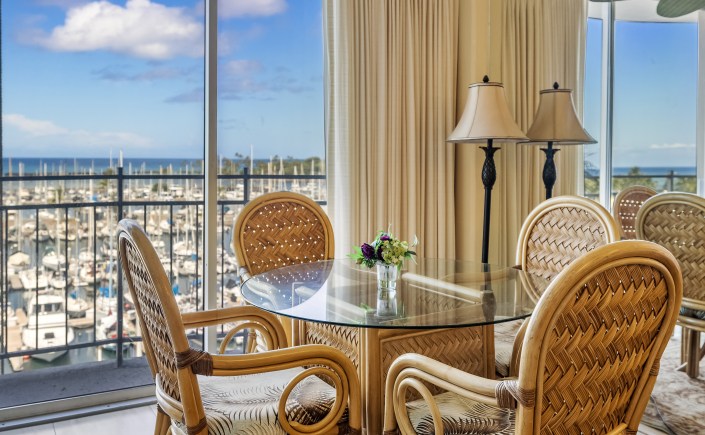
This fully furnished, turnkey unit features tile flooring throughout, a full kitchen, and a spacious bathroom. Perfectly positioned on the edge of Waikiki, you’re just minutes from Ala Moana Shopping Center, world-class dining, shopping, and all the best of island living.

Short-term rentals are permitted, making this an excellent investment opportunity or a flexible vacation retreat.

Don’t miss your chance to own a piece of paradise in one of Honolulu’s most desirable locations!

Interior Sq. Ft. 651, Lanai Sq. Ft. 28, Built 1968, Maintenance Fee and Special Assessment $1,201 per month, Property Taxes $594 per month. Electricity and A/C submetered. Community laundry and parking is available in the building garage for a fee.

Asking $825,000 FS